
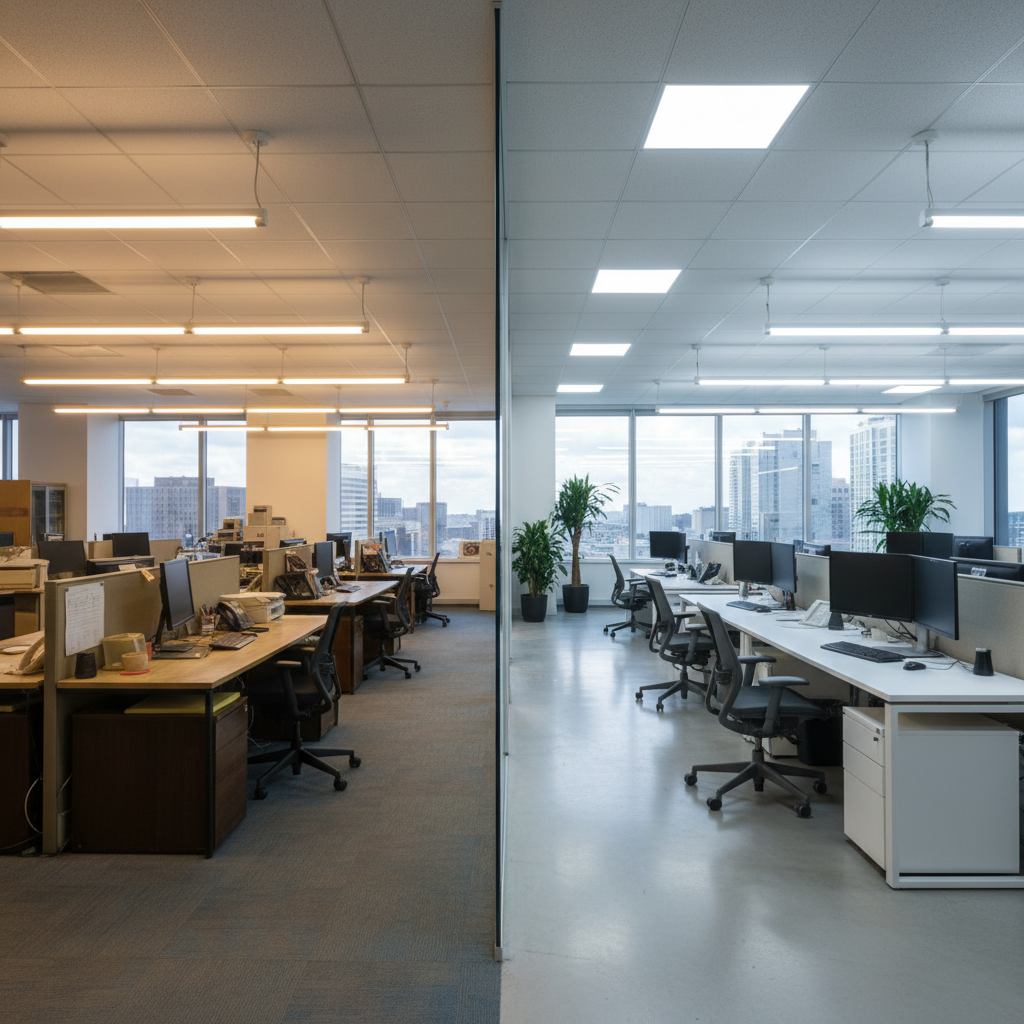
Energy costs are one of the largest operational expenses for businesses of all sizes. Whether you run a retail store, office building, warehouse, or manufacturing facility, lighting can account for a significant portion of your monthly utility bill. As energy prices continue to rise, many organizations are searching for effective ways to reduce expenses without sacrificing productivity or comfort.
One of the most practical and cost-effective solutions available today is LED Lighting Upgrades. Modern LED technology has transformed the way businesses illuminate their spaces, offering substantial energy savings, improved performance, and lower maintenance costs. Unlike traditional lighting systems, LEDs provide brighter, more efficient illumination while consuming significantly less electricity.
In this guide, we’ll explore how LED Lighting Upgrades help businesses reduce operating expenses, improve workplace environments, and achieve long-term savings through commercial lighting, energy-efficient lighting, and strategic electrical upgrades.
What Are LED Lighting Upgrades?
LED Lighting Upgrades involve replacing outdated lighting systems such as incandescent, fluorescent, halogen, or high-intensity discharge (HID) fixtures with modern LED technology. These upgrades can range from changing individual bulbs to completely redesigning a building’s lighting system.
LED stands for Light Emitting Diode, a technology that produces light through the movement of electrons within a semiconductor material. Unlike traditional bulbs that waste energy through heat generation, LEDs convert most of their energy directly into light.
This efficiency allows businesses to enjoy superior lighting quality while significantly reducing electricity consumption. Whether upgrading office workspaces, warehouses, retail environments, or outdoor areas, LED solutions offer measurable improvements in performance and cost savings.
Why Businesses Are Switching to LED Lighting
Businesses today face constant pressure to reduce operating costs while maintaining high standards of safety, comfort, and productivity. Lighting is often one of the easiest areas to improve because outdated systems consume more energy than necessary.
LED technology provides a solution that addresses multiple concerns simultaneously. Companies can lower utility expenses, reduce maintenance requirements, improve lighting quality, and support sustainability goals. These benefits make LED upgrades an attractive investment for organizations seeking both short-term savings and long-term financial gains.
In addition, many utility companies and local governments offer rebates and incentives for businesses that adopt energy-efficient lighting, further reducing the initial investment required for upgrading.
How LED Lighting Upgrades Reduce Energy Costs
Lower Energy Consumption
The primary reason businesses invest in LED Lighting Upgrades is the significant reduction in electricity usage. LEDs typically consume 50% to 80% less energy than traditional lighting systems while producing the same or better illumination.
For example, a conventional fluorescent fixture may consume 64 watts of power, while an equivalent LED fixture may require only 24 to 30 watts. When multiplied across hundreds or thousands of fixtures within a commercial property, the savings become substantial.
Lower energy consumption translates directly into lower utility bills month after month, making LED upgrades one of the most effective cost-saving strategies available.
Real-World Savings Example
Imagine a warehouse operating 200 light fixtures for 12 hours per day. By switching to LED technology, the facility could reduce annual electricity usage by thousands of kilowatt-hours, resulting in significant cost savings year after year.
Reduced Cooling Costs
Traditional lighting systems generate a considerable amount of heat. Incandescent and halogen bulbs, in particular, waste a large percentage of energy as heat rather than light.
This excess heat forces HVAC systems to work harder to maintain comfortable indoor temperatures, especially during warmer months. LED fixtures produce significantly less heat, reducing the workload on air conditioning systems.
As a result, businesses not only save on lighting expenses but also lower cooling costs, creating a dual source of energy savings.
Longer Lifespan
One of the most impressive advantages of LED technology is its longevity. Traditional bulbs often require replacement every few thousand hours, whereas LED fixtures can last 50,000 hours or more.
For businesses operating long hours, this extended lifespan dramatically reduces replacement frequency. Fewer replacements mean lower labor costs, fewer disruptions, and reduced spending on replacement bulbs.
The combination of energy savings and maintenance reductions significantly improves the overall return on investment.
Benefits of Energy-Efficient Lighting for Commercial Buildings
Improved Workplace Productivity
Lighting quality has a direct impact on employee performance and comfort. Poor lighting can contribute to eye strain, fatigue, headaches, and reduced concentration.
Modern energy-efficient lighting systems provide consistent illumination, improved color rendering, and reduced flickering. Employees can work more comfortably and efficiently in well-lit environments.
Better lighting creates a more professional atmosphere while helping workers remain focused and productive throughout the day.
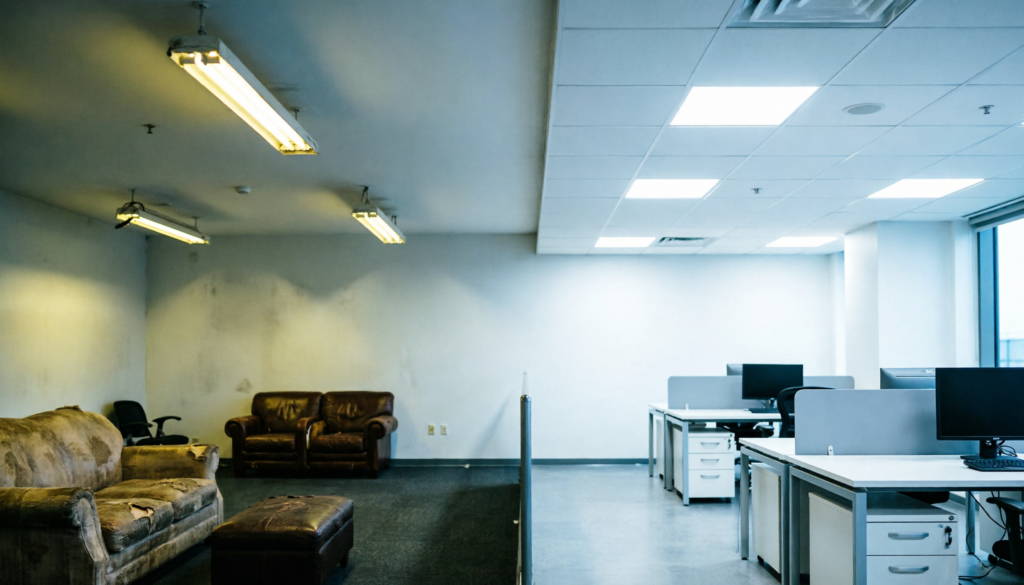
Enhanced Safety and Visibility
Safety is a top priority in commercial environments. Poorly lit workspaces increase the risk of accidents, injuries, and operational errors.
LED systems provide brighter, more uniform lighting that improves visibility in offices, warehouses, manufacturing facilities, and parking lots. Enhanced visibility helps employees navigate workspaces safely while improving security in exterior areas.
Businesses that prioritize lighting upgrades often experience improved safety outcomes and reduced liability risks.
Lower Maintenance Expenses
Maintenance costs can quickly add up in large commercial facilities. Replacing burned-out bulbs requires labor, equipment, and sometimes temporary interruptions to operations.
Because LEDs last significantly longer than traditional lighting systems, maintenance requirements are dramatically reduced. Facility managers spend less time replacing fixtures and more time focusing on other operational priorities.
This reduction in maintenance expenses contributes to the overall financial benefits of LED upgrades.
Types of Commercial Lighting Upgrades
Office Lighting
Office environments benefit from LED panels, troffers, and task lighting systems that improve visibility while reducing energy usage. Proper lighting enhances employee comfort and creates a more professional workplace atmosphere.
Warehouse Lighting
Warehouses often operate large lighting systems for extended periods. High-bay LED fixtures provide bright illumination while consuming significantly less power than traditional metal halide or fluorescent systems.
These upgrades can generate substantial energy savings due to the scale of warehouse operations.
Retail Lighting
Retail businesses use lighting to highlight products and create inviting shopping experiences. LEDs offer superior color accuracy and flexibility, helping merchandise appear more attractive while lowering operating costs.
Retailers can also use LED accent lighting to draw attention to featured displays and promotional areas.
Outdoor and Parking Lot Lighting
Exterior lighting plays a critical role in safety and security. LED parking lot lights, wall packs, and floodlights provide reliable illumination while reducing electricity consumption.
Many outdoor LED systems also include smart controls that further enhance energy efficiency by adjusting brightness based on occupancy or daylight conditions.
The Role of Electrical Upgrades in LED Installation
While LED fixtures are highly efficient, some buildings may require electrical upgrades to maximize performance and safety.
Older facilities often have outdated wiring, overloaded circuits, or aging electrical panels that may not support modern lighting technologies efficiently. Upgrading these components ensures the new LED system operates reliably and safely.
Common electrical improvements include:
- Updating breaker panels
- Replacing outdated wiring
- Installing smart lighting controls
- Adding dedicated circuits
- Improving surge protection
Combining LED lighting with strategic electrical improvements often produces the best long-term results.
Calculating ROI from LED Lighting Upgrades
One of the most appealing aspects of LED projects is their relatively quick return on investment (ROI).
When evaluating ROI, businesses should consider:
- Reduced energy costs
- Lower maintenance expenses
- Utility rebates and incentives
- Increased productivity
- Extended fixture lifespan
Many commercial LED projects achieve payback periods ranging from one to five years, depending on facility size and operating hours. After the initial investment is recovered, businesses continue benefiting from lower operating expenses for many years.
Tips for Choosing the Right Commercial Lighting Solutions
Selecting the right lighting system is essential for maximizing savings and performance.
Consider the following factors:
Assess Current Energy Usage
Review utility bills and identify areas where lighting consumes the most electricity.
Evaluate Lighting Needs
Different environments require different lighting levels. Warehouses, offices, retail spaces, and outdoor areas each have unique requirements.
Choose High-Quality Products
Investing in reputable LED products ensures reliability, efficiency, and long-term performance.
Consider Smart Controls
Motion sensors, occupancy sensors, and programmable lighting systems can further reduce energy consumption.
Work with Experienced Professionals
Professional assessments help identify opportunities for improvement and ensure proper installation.
Common Mistakes Businesses Should Avoid
Many organizations make avoidable mistakes during lighting upgrades.
Common errors include:
- Choosing fixtures based solely on price
- Ignoring lighting design requirements
- Overlooking electrical infrastructure issues
- Failing to calculate total lifecycle costs
- Skipping professional installation
Avoiding these mistakes helps ensure the project delivers maximum value and long-term savings.
Why Professional Installation Matters
Professional installation ensures LED systems perform safely and efficiently. Experienced electricians understand local codes, electrical requirements, and lighting design principles.
They can identify potential issues before installation begins, recommend appropriate fixtures, and verify that all components function correctly. Professional expertise reduces risks, improves reliability, and helps businesses maximize the return on their investment.
Conclusion
LED Lighting Upgrades have become one of the most effective ways for businesses to reduce operating costs and improve energy efficiency. By replacing outdated fixtures with modern energy-efficient lighting, companies can significantly lower utility bills, reduce maintenance expenses, enhance workplace safety, and create more comfortable environments for employees and customers.
Whether you’re upgrading office spaces, warehouses, retail stores, or outdoor areas, modern commercial lighting solutions provide long-term value and measurable financial benefits. When combined with necessary electrical upgrades, LED technology delivers reliable performance and impressive returns on investment. For businesses seeking a practical path toward lower energy costs and improved operational efficiency, LED lighting upgrades are a smart and sustainable choice.
Frequently Asked Questions
1. How much can businesses save with LED lighting upgrades?
Most businesses can reduce lighting-related energy costs by 50% to 80%, depending on their existing system and operating hours.
2. How long do LED lights last in commercial settings?
Commercial LED fixtures often last between 50,000 and 100,000 hours, significantly longer than traditional lighting options.
3. Do LED lighting upgrades require electrical upgrades?
Not always, but older buildings may benefit from electrical improvements to ensure safe and efficient operation.
4. Are LED lights suitable for warehouses and industrial facilities?
Yes. LED high-bay fixtures are widely used in warehouses and industrial environments because they provide excellent illumination and energy efficiency.
5. Is the investment in LED lighting worth it?
Yes. Most businesses recover their investment through energy and maintenance savings within a few years, making LED upgrades highly cost-effective.