
No one likes a power outage. Extreme weather and grid failures can cause power to go out anywhere at any time.
When the power goes out, your home is left in darkness. Your food goes bad, and your heating and cooling systems no longer work.
If you invest in backup power, you’ll be able to keep your appliances running and avoid distress for your family.
Colorado Electrical & Smart Integrations will tell you the generator installation cost for a backup power system.
How Much Does a Generator Installation Cost?
To figure out the generator installation cost, you need to know what power capacity your home needs. The total cost can go from $5,000 to $18,000.
What You Need to Consider Before Generator Installation
Generator Size with Kilowatts:
The size of the generator will depend on the number of kilowatts the home needs to operate heavy appliances at the same time.
Panel Upgrades:
Older homes may need a new main electrical breaker panel to safely handle the transfer switch.
Proximity of Fuel Line:
The time taken to lay new lines over your yard adds labor hours.
Total Estimated Budgets by Generator Capacity
| Size of Generator | Generator Installation Cost Range | Best For |
| 7 kW – 10 kW | $3,500 to $6,500 | Small homes, running essential lights and fridges |
| 12 kW – 20 kW | $6,500 to $11,000 | Medium-sized homes, running ACs in rooms |
| 22 kW – 26 kW+ | $11,000 to $18,000+ | Large properties, full power backup |
Choosing Your System for Generator Installation
The long-term whole-house generator cost will depend on the backup solution you have selected. There are portable and automatic permanent systems that you can choose from.
Portable Generators vs. Whole-House Standby Units
- Portable Units: Low cost, but must be manually set up, extension cords required, and gasoline refills often needed.
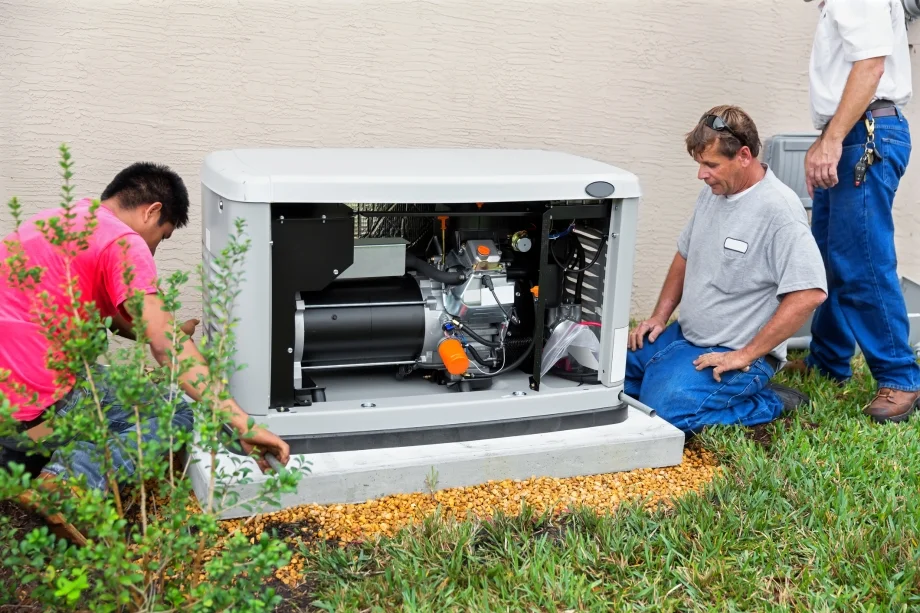
- Standby Units: These are permanent fixtures that are there to keep an eye on your grid power and will automatically switch on within seconds of the power going out.
System Components That Make All the Difference
- Automatic Transfer Switch:
The switch that automatically moves your power load when the electricity goes out from the grid to your backup source.
- Concrete Mounting Pad:
A solid concrete base that is level and saves your equipment from dirt and flood water.
- Fuel Storage Tanks:
If your property does not have a direct natural gas line hookup, you will need to have large external propane tanks.
Setup, Installation, and Whole-Home Generator Cost
A professional generator installation needs complex mechanical coordination.
- You need to prepare the site by excavating and pouring a flat concrete foundation pad for the outdoor unit.
- Connect to the existing natural gas service line or tanks.
- Place the automatic transfer switch side-by-side with the home’s main circuit breaker box.
Balancing the Whole Home Generator Cost
Buying the unit takes about 50% to 60% of your project estimate.
The remainder is spent on hiring licensed subcontractors for the specialized pipe and electrical connections.
A small section goes to permits and city inspection fees.
Why Work with a Professional for Generator Hookup?
- Professionals are licensed and come with general liability insurance.
- They have official factory-authorized installation certificates from leading manufacturers.
- They offer a detailed written quote, including the cost of machines and labor.
Conclusion
It is impossible to live without power in today’s age. Every home appliance runs on electricity, and a small disruption ruins our daily routine.
Portable hookups are a great and affordable solution for emergencies. The installation cost of an upgrade to a permanent standby system is higher, but it offers hassle-free, lifetime appliance coverage.
Call a professional. Choose a system that fits your home’s energy usage. Get it installed for stress-free power outages.
FAQs.
Why is the labor rate so high for the installation of generators?
You need a licensed plumber and electrician to install a permanent generator. The electrician installs the automatic switch box, and the plumber makes sure high-pressure gas fuel lines are properly connected.
How much power does a 2,500-square-foot home require?
The typical 2,500 sq. ft. home will operate efficiently with a 20kw to 22kw standby unit. This capacity can power your air conditioning, appliances, lights, and water pumps.
How long will it take to install a standby generator professionally?
The mounting of the pad, running lines, and finishing the electrical wiring are all done in 1 to 2 days by most professionals.
Will a whole-house generator work with gasoline?
No, permanent standby units are fueled by your natural gas utility or liquid propane fuel tanks.
Does the addition of a standby generator add resale value?
Yes, it does. According to real estate market data, properties equipped with permanent backup power systems sell fast and offer an increase in equity between 3% and 5%.